
6901 SW 14th Street, Des Moines, Iowa 50315
 DONATE
New to Zen?
DONATE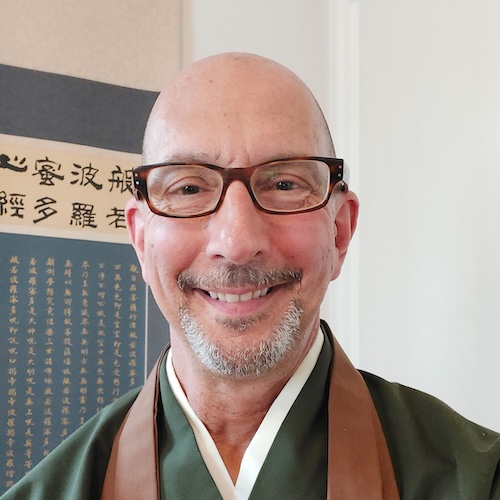
Rev. Eishin Tom Houghton is the head priest and teacher at the Des Moines Zen Center. He has been studying Buddhist teachings since 1998 and began practicing Zen at the Des Moines Zen Center in 2009. In 2011, he received lay ordination from Rev. Eido Espe and was given the Dharma name Eishin. He was priest-ordained in 2015, received Dharma transmission from Rev. Espe in 2022, and became head priest of the Des Moines Zen Center in April 2023 when Rev. Espe transitioned to an emeritus role.
Eishin has also trained at Ryumonji Zen Monastery in northeast Iowa, practicing for years under his grandfather teacher, Rev. Shoken Winecoff. His practice is further shaped by the Christian contemplative tradition, especially the teachings of Father Richard Rohr from Albuquerque, New Mexico.
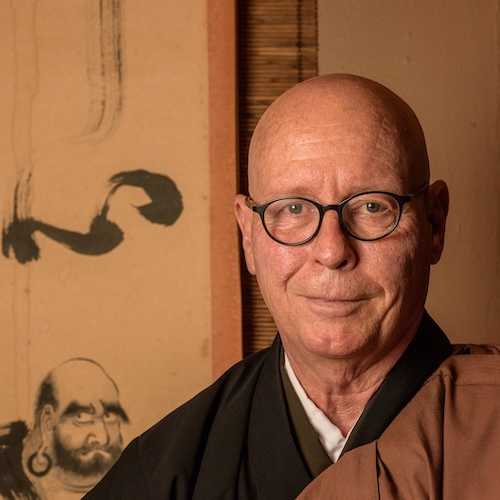
Rev. Eido Bruce Espe is head priest and teacher emeritus of the Des Moines Zen Center and serves as vice-abbot of Ryumonji Zen Monastery in northeast Iowa. He is the founder of Shinsenji (Deep River Temple), the official Soto Zen designation given to the Des Moines Zen Center by the Japanese Sotoshu in recognition of his dedication and practice.
Rev. Espe discovered Zen after serving in the Army, including a tour of duty in Vietnam. He has two grown children, two grandchildren, and is retired from a career as a hospice nurse.
He is a Soto Zen priest in the lineage of Dainin Katagiri Roshi, receiving ordination in 1997 and Dharma transmission in 2010 from Rev. Shoken Winecoff. His training includes extensive practice in Japan, where he completed four ango practice periods and zuise ceremonies at Eiheiji and Sojiji Monasteries.
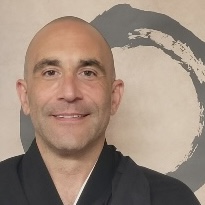
Gendo Curtis Thornberry has practiced Zen within Dainin Katagiri's lineage for over a decade, training primarily with Rev. Eido Espe. He was ordained as a priest in 2022 and practices at Ryumonji Zen Monastery in Iowa with Shoken Winecoff Roshi.
Gendo teaches classes and offers dharma talks at the Zen Center, supporting students in their practice and study of the dharma.
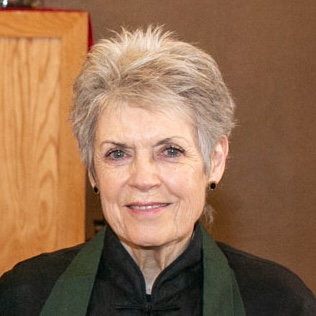
Vicki Joren Goldsmith is a lay teacher at the Des Moines Zen Center. In the early 1990's she was curious about the effects of silence on her daily life and decided to visit the zen center. She never left. In 1992 she joined Bret Hoken McFarlin and a small group of people who practiced zazen in a rented bedroom of the Thoreau Center. For about a decade they practiced with one candle, one bell, no priest, and no library. Vicki, Bret, and two other practitioners received lay ordination from Shoken Winecoff, head of Ryumonji Monastery, who gave Vicki her Buddhist name, Joren, which means "the lotus that blooms in muddy water." That name has become both a mandate and a comfort as she faces the muddy water of each new day.
After the sangha outgrew several locations and bought its present one, Vicki became one of the lay teachers. Her practice is strengthened by the sangha, the readings in book discussion, and the regular zazen practice. The zen center now offers several candles, several bells, several priests, and a library, but what matters most is sitting on that same cushion staring at that same wall.
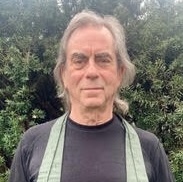
Bret Kinryu Hoken McFarlin is a lay teacher of Soto Zen in the Dainin Katagiri lineage at the Des Moines Zen Center. He was entrusted by Rev. Eishin Houghton on February 9, 2025.
Hoken first glimpsed Zen’s path in a rural Tennessee meadow where he sat “hippie zen” (zazen, but groovier) with other members of The Farm commune in 1974. Suzuki Roshi’s Zen Mind, Beginners Mind served well as their instruction manual. Later came visits to Soto and Rinzai centers offering more formal zazen, as well as Vipassana and Tibetan retreats, including tantric initiation by His Holiness the 14th Dalai.
In 1992 Hoken joined four others also possessing beginners’ minds, including Vicki Joren Goldsmith, another current Zen Center lay teacher. Together they sat upright, silent and still, manifesting sangha from thin air. Over three decades, Des Moines Zen Center grew into Shinsenji, Deep River Temple. Honoring buddhas, ancestors and teachers, Kinryu Hoken roams dharma fields, aspiring to continuous practice, vowing to further awaken from the pernicious illusion that we are in any way separate from one another.
The Des Moines Zen Center is supported entirely by the generosity of its community. Our teachings, practice opportunities, and programs are offered freely and sustained through voluntary donations.
If you wish to support the ongoing work and practice of the Zen Center, you are invited to make a free-will offering. Donations may be given as a one-time gift or set up as a recurring offering. Please visit our Donation page or use the Donate button here to give securely by PayPal or debit/credit card.


.png)